Ford Transit Custom MS-RT: Review and Business Finance
Written by Alex Prince, Finance Broker · 30 June 2026
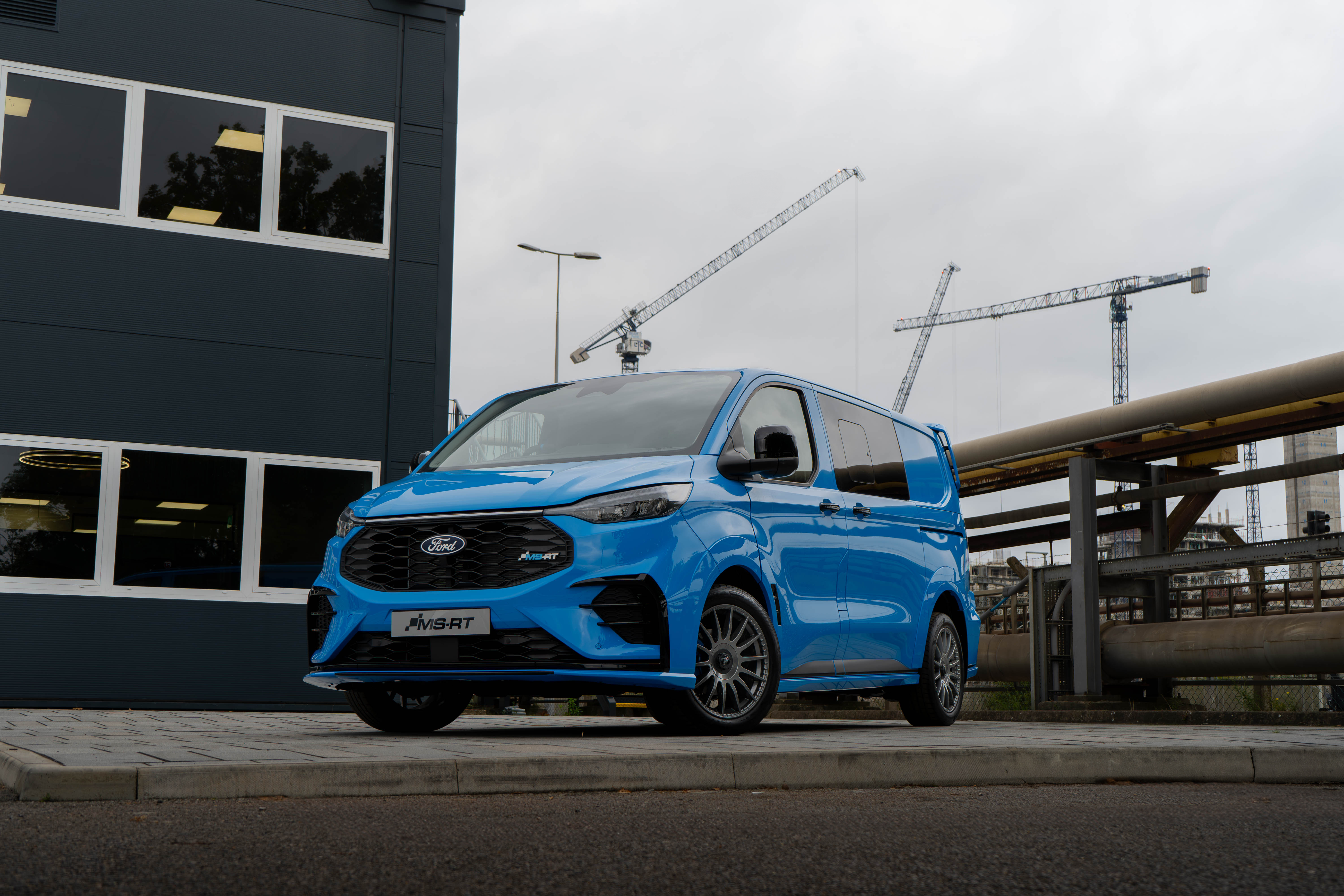
The Ford Transit Custom MS-RT is a motorsport-styled version of Britain's best-selling van, developed with Welsh rally firm M-Sport. The all-electric version produces 210kW, around 281bhp, driven through the rear wheels, making it the most powerful Transit ever built. It is available as a diesel, a plug-in hybrid, or fully electric, and can be financed through your business like any other commercial vehicle.
A van that turns heads
Every so often a van comes along that makes you look twice. The Ford Transit Custom MS-RT is one of them. It has a rear spoiler. It has a full body kit. It has 19-inch anthracite alloy wheels and a track width wider than a standard Transit. And in its electric form it sends nearly 282 brake horsepower to the rear wheels, which is the sort of thing you normally read about on a sports car, not a panel van.
It is, frankly, ridiculous. It is also completely brilliant, and there are good reasons why a business owner might want one that go beyond simply wanting the coolest van on the site. Here is the full picture, and how you could fund one through your company.
What is the MS-RT?
MS-RT stands for M-Sport Road Technology. M-Sport is the Cumbria and Wales based operation that has run Ford's rally programme for years, and the MS-RT badge has been turning Transits into motorsport-styled machines since 2018. What started as an aftermarket conversion has become a proper part of the Ford Pro van line-up.
The MS-RT treatment is not just stickers and a spoiler. The body kit is designed to widen and lower the visual stance, with a reprofiled front bumper, side skirts, a rear diffuser, and wider wheel arches. The electric version adds a full-width LED light bar across the nose to mark it out from the diesel and hybrid models. Inside there are sports seats, MS-RT branded head restraints, Alcantara trim, and a chunky leather steering wheel. It looks the part because it was designed to.
The most powerful Transit ever built
Here is where it gets genuinely surprising. The all-electric E-Transit Custom MS-RT produces 210kW, which is around 281 to 282bhp, and it drives the rear wheels. Rear-wheel drive, in a van, with that much power, is unusual and it gives the MS-RT a character no ordinary Transit has ever had.
You do not have to go electric. The MS-RT is also available with Ford's familiar 2.0-litre EcoBlue diesel, which suits businesses that cover big motorway miles and cannot easily charge, and as a plug-in hybrid using a 2.5-litre petrol engine with around 232PS for those who want some electric running without full commitment to a battery vehicle. But the electric version is the headline act, and it is the one that has everyone talking.
The trade-off for all that electric performance is range. Ford quotes up to around 173 miles for the electric MS-RT, a little less than the 209 miles of the standard E-Transit Custom because of the wider wheels, tyres, and body kit. As with any electric vehicle, expect that figure to drop in cold weather, at motorway speeds, and with a full load on board. For a business doing local and regional work with charging at base, it is workable. For a business living on the motorway network all day, the diesel makes more sense.
Can it still do a proper day's work?
This is the question that matters, because a van that cannot work is just an expensive ornament.
The good news is that it can. The Transit Custom MS-RT offers up to 6.8 cubic metres of load space and a payload of up to 1,124kg depending on configuration. The electric version carries a little less, around 989kg, because the body kit adds weight, but that is still a genuine working payload. It will tow up to 2.3 tonnes as an electric model and up to 2.5 tonnes as a diesel, which is right at the top of its class.
Body styles include the standard Panel Van and the Double Cab-in-Van for businesses that need to carry a crew as well as kit, in both L1 and L2 lengths. So underneath the motorsport styling, it is still doing all the things a Transit Custom is supposed to do. The load bay does not care that the outside looks like it belongs on a rally stage.
Who is it actually for?
The MS-RT is not really aimed at the operator running twenty vans on the tightest possible budget. It is aimed at the owner who wants their van to say something about their business.
For a lot of trades, the van is the brand. It sits outside customers' houses, it parks up at sites, and it gets seen by hundreds of people a day. A high-end kitchen fitter, a premium electrician, a specialist installer, a growing trade business that wants to look established and successful, all of these have a genuine commercial reason to drive something that stands out. A van that turns heads is rolling advertising, and the MS-RT turns heads in a way almost nothing else on four commercial wheels manages.
It is also, quite simply, a nicer thing to spend your working day in. If you are going to sit in a van for ten hours, the sports seats, the sharp interior, and in the electric version the quiet, instant performance make the day more pleasant. That has a value too.
What does it cost?
There is no getting around it, the MS-RT is not cheap. The electric E-Transit Custom MS-RT starts at around £60,490 excluding VAT, which works out at roughly £74,400 on the road once VAT is added. The diesel models are more affordable but still sit at the premium end of the Transit Custom range.
This is exactly where financing the van through your business starts to make sense, for two reasons. The first is cash flow. Very few businesses want to hand over £60,000 or more in one go for a vehicle when that money could be working elsewhere in the business. The second is the way the numbers work for a VAT-registered business buying an electric commercial vehicle, which is where this gets interesting.
How to finance a Transit Custom MS-RT through your business
We arrange finance on the full Transit Custom MS-RT range, diesel, plug-in hybrid, and electric, for limited companies and sole traders across the UK.
The most common route is hire purchase. You put down a deposit, spread the balance over an agreed term, and own the van outright at the end. For a VAT-registered business, the VAT is handled separately from the finance and reclaimed from HMRC in the normal way, so you are financing the pre-VAT price rather than the full sticker figure. On a van at this price, that makes a meaningful difference to the monthly payment. If keeping the monthly cost down matters, we can also look at structuring the agreement with a balloon payment at the end.
For businesses that want to compare, finance lease is also available. And a growing number of our customers come to us for pre-approval before they visit the dealer, so they know exactly what they can borrow and can negotiate the best possible price with finance already in place.
The tax efficiency of an electric MS-RT
This is where the electric version earns its keep, and it is worth understanding before you dismiss the price.
Electric vans are treated as plant and machinery for tax purposes, which means a limited company buying a new electric van under hire purchase can typically claim 100% of the cost as a first-year deduction under full expensing. On a van costing around £60,000, that is a first-year tax saving of up to £15,000 for a company paying corporation tax at 25%. The VAT is reclaimable for a VAT-registered business in the usual way. Add in the lower running costs of an electric vehicle, exemption from the London ULEZ and other clean air zone charges, and the numbers on an electric MS-RT start to look a great deal more sensible than the headline price suggests.
We should say clearly that the exact tax position depends on your business and how the van is used, and your accountant is the person to confirm what you can claim. But the general point stands. An electric commercial vehicle bought through a VAT-registered limited company is one of the more tax-efficient purchases a business can make, and the MS-RT is no exception. You can read more about the tax treatment of electric vans on our electric van finance page.
The verdict
The Ford Transit Custom MS-RT is a wonderful, slightly absurd thing. It is the fastest Transit ever made, it looks like nothing else on the road, and it still does the honest work a Transit has always done. It is not cheap, but for the right business it is a serious asset. It markets your company every time it is parked up, it makes the working day better, and in electric form it comes with tax advantages that take a lot of the sting out of the price.
If you like the look of one, the finance is the easy part. That is what we do. Get in touch and we will tell you what it would cost to put an MS-RT on the road for your business, and get you pre-approved so you can go and choose the one you want.
Business Van Finance
We arrange van finance for UK limited companies and sole traders. Access to 100+ lenders. FCA authorised, FRN 984955.
Find out more →Related Guides
Hire Purchase vs Finance Lease
Understand the difference between the two main types of van finance and which one suits your business.
Credit ProfilesBad Credit Van Finance
How specialist lenders approach adverse credit applications and what you can do to improve your chances.
DepositsNo Deposit Van Finance
When no deposit is genuinely available, how VAT deferral works, and what lenders look for.
Frequently asked questions
Ready to arrange your van finance?
Speak to a specialist today. No obligation, no upfront fees.