Electric Van Finance
Finance for new and used electric commercial vans. The government plug-in van grant is still available, manufacturer incentives are at their most competitive, and the tax advantages on electric vans are significant. Here's what you need to know before you apply.
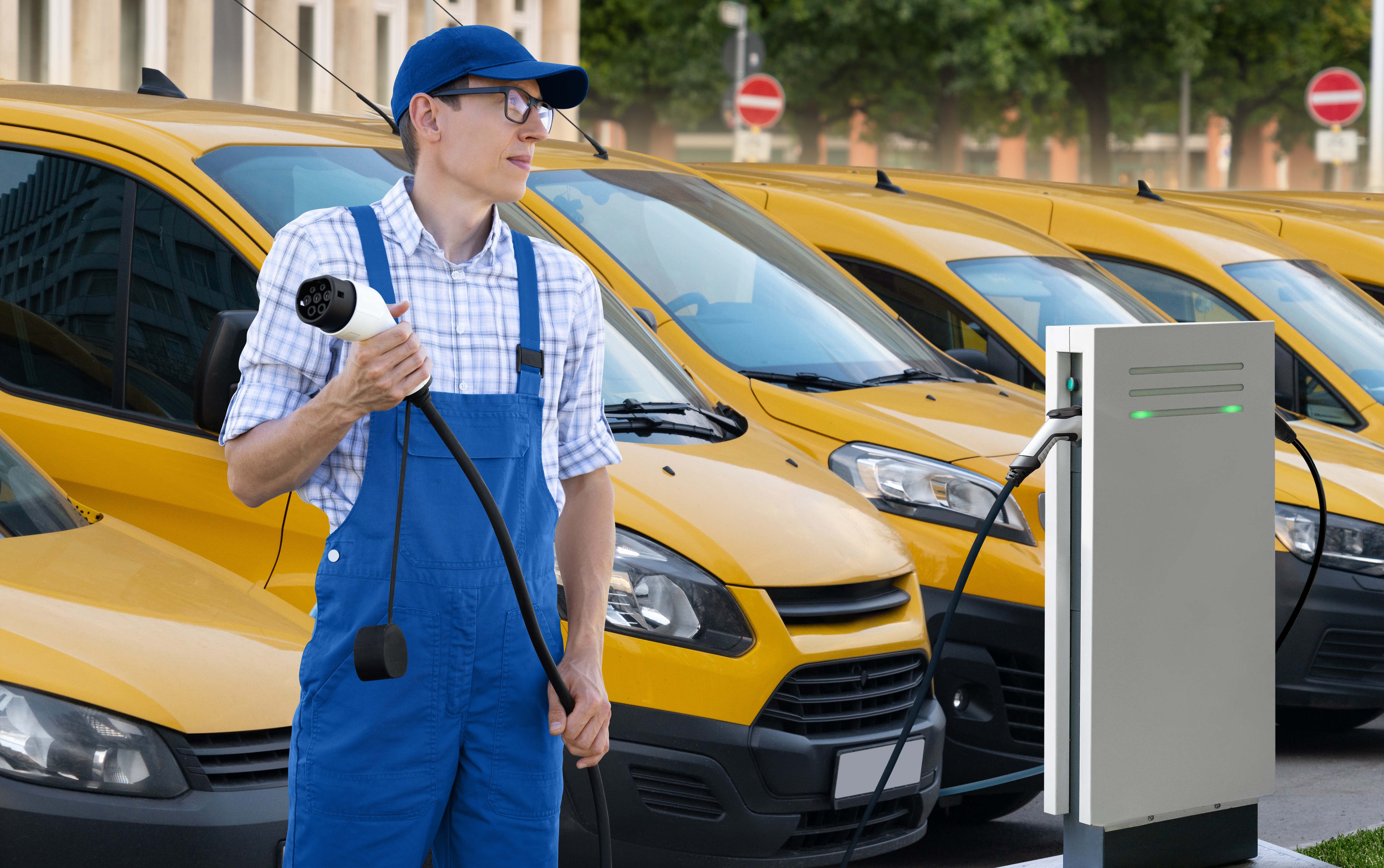
What is electric van finance? Electric van finance is a commercial funding agreement allowing businesses to acquire battery electric vehicles (BEVs) over a fixed term. It provides access to government grants, significant tax advantages like full expensing, and lower operational costs compared to diesel alternatives. Learn more about these concepts in our Van Finance Glossary.
Electric vans are no longer just a novelty; they're a genuine commercial option. The technology is finally up to scratch, with ranges that actually cover typical daily routes. On top of that, manufacturer incentives are stronger than ever. Add in the current tax benefits for hire purchase agreements, and it's easily one of the most tax-efficient assets you can fund for your business right now.
Of course, going electric isn't right for everyone. If you do massive motorway miles or your drivers can't charge at home overnight, diesel might still be the way to go. However, if you've done the maths and an EV works for your routes, getting it financed is pretty straightforward. The process is very similar to funding a standard diesel van, just with a few extra details to keep in mind before you jump in.
The plug-in van grant: what it means for your finance
The government's plug-in van grant is still up and running, having been extended through the 2026 to 2027 financial year. The best part is that the dealer applies the discount right at the point of purchase. You don't have to fill out any extra paperwork to claim it; it just comes straight off the sticker price.
Here's what the current grant gives you:
- Up to £5,000 off large electric vans (up to 3.5 tonnes GVW, or 4.25 tonnes for N2-category).
- Up to £2,500 off small electric vans under 2.5 tonnes.
- It only applies to brand new vans. Used EVs miss out on this one.
- You can claim up to 1,500 grants per business each financial year (which covers pretty much any SME).
From a finance perspective, the grant is great news because it directly lowers the amount you're borrowing. If you're looking at a large electric van listed at £55,000, it instantly becomes a £50,000 finance agreement. That brings down your monthly payments and reduces your total interest. Given that the grant isn't guaranteed to stick around at these levels forever, it's definitely a strong reason to act sooner rather than later if you're on the fence.
Why manufacturers are offering better deals right now
Because of the UK's Zero Emission Vehicle mandate (read our full guide on how the ZEV mandate affects electric van finance), manufacturers have to make sure that 24% of all new vans they sell in 2026 are electric. With market penetration currently sitting around 12%, they have a lot of ground to make up, and the fines for missing those targets are incredibly steep.
This regulatory pressure actually works brilliantly in your favour as a buyer. Brands are throwing everything at it: heavily discounted pricing, extended warranties, and even subsidised finance through their own in-house lenders. By using an independent broker alongside checking the main dealer offers, you can easily compare everything on the table and make sure you're getting the sharpest possible deal.
Finance products available on electric vans
Hire purchase
This is the most popular route for funding an electric van, and definitely the simplest. You make fixed monthly payments over a set term, and once it's paid off, the van is completely yours. If your goal is to own the vehicle outright and take advantage of the capital allowances, hire purchase is usually the way to go.
Speaking of tax, the capital allowance position on a brand new electric van under hire purchase is incredibly strong right now. Because HMRC classifies electric vans as plant and machinery (rather than cars), they qualify for the Annual Investment Allowance. If you're a limited company buying a new van, you can even use full expensing to get 100% first-year relief on the entire purchase cost. To put that in perspective: on a £50,000 electric van, a company paying 25% corporation tax could see a £12,500 tax saving in year one. We always recommend running the exact numbers past your accountant, but the headline is that the tax benefits are hard to ignore.
Finance lease
You can definitely get a finance lease on an electric van, but it's a bit more complex than leasing a diesel.
The good news is that from January 2026, a new 40% first-year capital allowance applies to leased vans. This is a big deal because it closes a loophole that previously left leasing businesses missing out on the upfront tax relief you'd get from buying outright. Plus, your lease payments are still fully deductible as a business expense. If you prefer a lower upfront commitment and steady monthly costs, leasing an EV looks much more attractive than it used to.
The catch is that lenders are often much more cautious about the balloon payment and residual value at the end of the lease. Used electric van prices just aren't as predictable as diesel yet. Things like battery degradation, how the van was charged, and software updates impact an EV's second-hand value in ways that simply don't apply to diesel engines. Because of this, lenders tend to be conservative, which might change how the lease is structured. We'll always talk you through whether a lease or hire purchase makes more sense for your specific situation before we submit an application.
Capital allowances on electric vans: the tax case in plain English
We aren't accountants, so you should always run this past your own tax professional. That said, the tax breaks are often the main reason businesses make the switch, so it helps to understand the basics.
Electric vans are not cars
This is a massive point. HMRC treats cars and vans completely differently when it comes to capital allowances. While electric cars do get a 100% first-year allowance, they miss out on the Annual Investment Allowance and full expensing. Electric vans, on the other hand, qualify for the entire range of commercial vehicle allowances. The difference this makes to your tax return is huge.
Under hire purchase
If your limited company buys a new electric van on hire purchase, you can claim 100% of the cost as a first-year deduction using full expensing. So, if you're paying 25% corporation tax on a £50,000 van, that knocks £12,500 off your tax bill in the first year. Sole traders and partnerships can use the AIA to get the exact same result (up to £1 million a year). Just remember, this is calculated on the price after the plug-in grant has been taken off.
Under finance lease
From January 2026, leased vans qualify for a 40% first-year allowance on the lease cost. It doesn't quite match the full expensing treatment you get with hire purchase, but it's a huge improvement from the old rules where leased vans got zero first-year uplift. Plus, your monthly lease payments are still fully deductible as a business expense. Your accountant can run the numbers to see which structure leaves you better off.
Residual values and why they matter
If you're using hire purchase to buy a van that you plan to keep for years, you probably aren't losing sleep over residual values. With a diesel van, it's pretty straightforward. But with an electric van, it's definitely worth keeping in the back of your mind, no matter how you're funding it.
Right now, the health of the battery dictates the second-hand value of an EV. A van with a battery sitting at 90% health is going to fetch a noticeable premium over the exact same model sitting at 75%. And how you charge it matters. Constantly using rapid chargers, which a lot of couriers and tradespeople have to do, wears the battery down faster than slow, overnight charging. When it comes time to sell, specialist buyers will almost certainly ask for service records and a battery health report.
For most businesses, this won't change the decision to buy. If you're running the van into the ground or keeping it long-term, what it's worth in three years doesn't really matter. But residual values become incredibly important if you need to sell it early, or if you're on a finance lease where the final balloon payment assumes the van will be worth more than it actually is.
We always warn people about the end-of-term risk with diesel finance leases, but the risk is definitely higher with electric vans simply because the used market is harder to predict. It's just something you need to be aware of before you sign the paperwork.
Charging infrastructure
While we don't install chargers ourselves, infrastructure is something both lenders and business owners bring up constantly, so we have to mention it.
If you're operating out of a depot or commercial yard, the government's Workplace Charging Scheme is brilliant. It gives businesses up to £500 per socket to help cover the installation costs, and you can claim it for up to 40 sockets per site. It's available until March 2027, so it's definitely worth factoring into your budget if you're making the switch.
Honestly, most of the clients we speak to have already figured out their charging logistics before they even pick up the phone to talk finance. If you haven't quite nailed that down yet, we highly recommend getting it sorted before you apply. It's not that lenders will demand to see your charging plans, but you really need to know the van is going to work for your daily routes before you sign a multi-year finance agreement.
ULEZ, clean air zones, and what electric vans cost to run
One of the biggest perks of driving an electric van is that you don't have to pay the Ultra Low Emission Zone (ULEZ) charge in London, which is currently £12.50 a day. You also get a free pass in clean air zones across cities like Birmingham, Bath, and Bristol.
If your business operates in these zones regularly, the savings over a standard five-year finance term are massive. Think about it: a non-compliant van doing ten trips a week into London will rack up over £22,000 in ULEZ charges over four years. An electric van avoids that entirely.
Then there's the fuel. The savings compared to diesel are well-documented and very real. Obviously, the exact numbers depend on your electricity tariff and how many miles you do, but the cost per mile is almost always cheaper. We're finance brokers, not energy consultants, so we'll leave the exact cost comparisons to you and your accountant, but it's a huge part of the total cost of ownership.
Electric van makes we regularly arrange finance for
The variety of electric vans available to UK businesses has exploded recently. A few years ago, you had maybe two or three viable options; today, there's a fantastic market out there.
- Ford E-Transit and E-Transit Custom: the heavyweights of the UK van market are now fully battery electric.
- Mercedes-Benz eSprinter: the electric version of the most premium large van on the road.
- Volkswagen ID. Buzz Cargo: a brilliant, distinctive option for businesses that want their van to make a statement.
- Vauxhall Vivaro Electric and Movano Electric: solid, dependable options with genuinely useful real-world range.
- Renault Kangoo E-Tech and Master E-Tech: great coverage across both the small and large van sectors.
- Peugeot E-Expert and E-Boxer, Citroën ë-Dispatch and ë-Relay: the Stellantis group vans, offering proven tech across different badges.
- Toyota Proace Electric: a huge hit with businesses running a mix of diesel and electric fleets.
- Maxus eDELIVER 3 and eDELIVER 9: they're growing fast in the UK thanks to sharp pricing and a rapidly expanding dealer network.
If the van you've got your eye on isn't listed here, don't worry. Just get in touch and we'll confirm if we can get it funded.
New or used electric vans
Financing a brand new electric van is incredibly straightforward, especially with the plug-in grant knocking down the purchase price and the generous capital allowances available.
Used electric vans are absolutely financeable too, though you'll find the pool of willing lenders is a bit smaller than it is for diesel vans. Lenders will look closely at the van's age, mileage, charging history, and the overall condition of the battery. The standard end-of-term age rule still applies: most lenders want the vehicle to be under eight to ten years old by the time the finance agreement finishes. Luckily, because commercial EVs are still relatively new to the market, most used models comfortably fit within this window.
Just remember, the plug-in grant is strictly for new vehicles. You can't claim it on a used van.
We recently helped Rachel, who runs a small courier business in the East Midlands. She found a 2022 Vauxhall Vivaro Electric with 38,000 miles and asked the dealer for a battery report, which showed a healthy 91%. We took that to a specialist EV lender and had the finance sorted in three days. The lender didn't explicitly demand the battery report, but having it upfront meant the underwriter had zero questions. If you're buying a used EV, getting that battery health check before applying is one of the smartest things you can do.
Who can apply
If you're a limited company, you can usually borrow anything from £10,000 upwards. Since most new electric vans cost significantly more than that, the loan amounts are generally well within the comfort zone of our mainstream lenders.
For sole traders, we can arrange finance from £25,000 on unregulated credit agreements, which covers most new electric vans anyway.
Brand new businesses are welcome to apply too. You'll likely need to put down a deposit, and lenders will look closely at the director's personal credit history since there aren't any company accounts to review yet. Have a look at our new business van finance page for a bit more detail on how that works.
And if you have a few bumps on your credit file, don't panic. We work with specialist lenders who are used to looking at the bigger picture rather than just a computer score. Head over to our bad credit van finance page to see how we handle those applications.
Speak to a specialist
If you're not sure whether your business profile or the specific van you're looking at will affect your application, the best thing to do is speak to us. We'll give you an honest assessment and tell you which lenders are most likely to consider your situation.
How it works
Apply online
Tell us about your business, the vehicle you want to fund, and the amount you need. Takes about 2 minutes.
We review your application
A dedicated specialist reviews your application, contacts you to discuss your needs, and identifies the most suitable lenders.
We present your options
We present the finance options to you. Once you're happy, we contact the dealer to arrange the invoice. No obligation to proceed.
Funds released to the dealer
Once approved and you've signed your documents, funds are released directly to the dealer or seller, so you can take delivery of your van.

Popular van makes we finance


We arrange finance for all major van makes and models. Don't see yours? Call us on 01730 777 736.
Apply for electric van finance today
Tell us about your business and the electric van you are looking at. A specialist will be in touch, usually within one business day.
If you'd prefer to call: 01730 777 736