Why Do Some Vans Have VAT and Some Don't?
Written by Guy Prince, Director · 28 June 2026
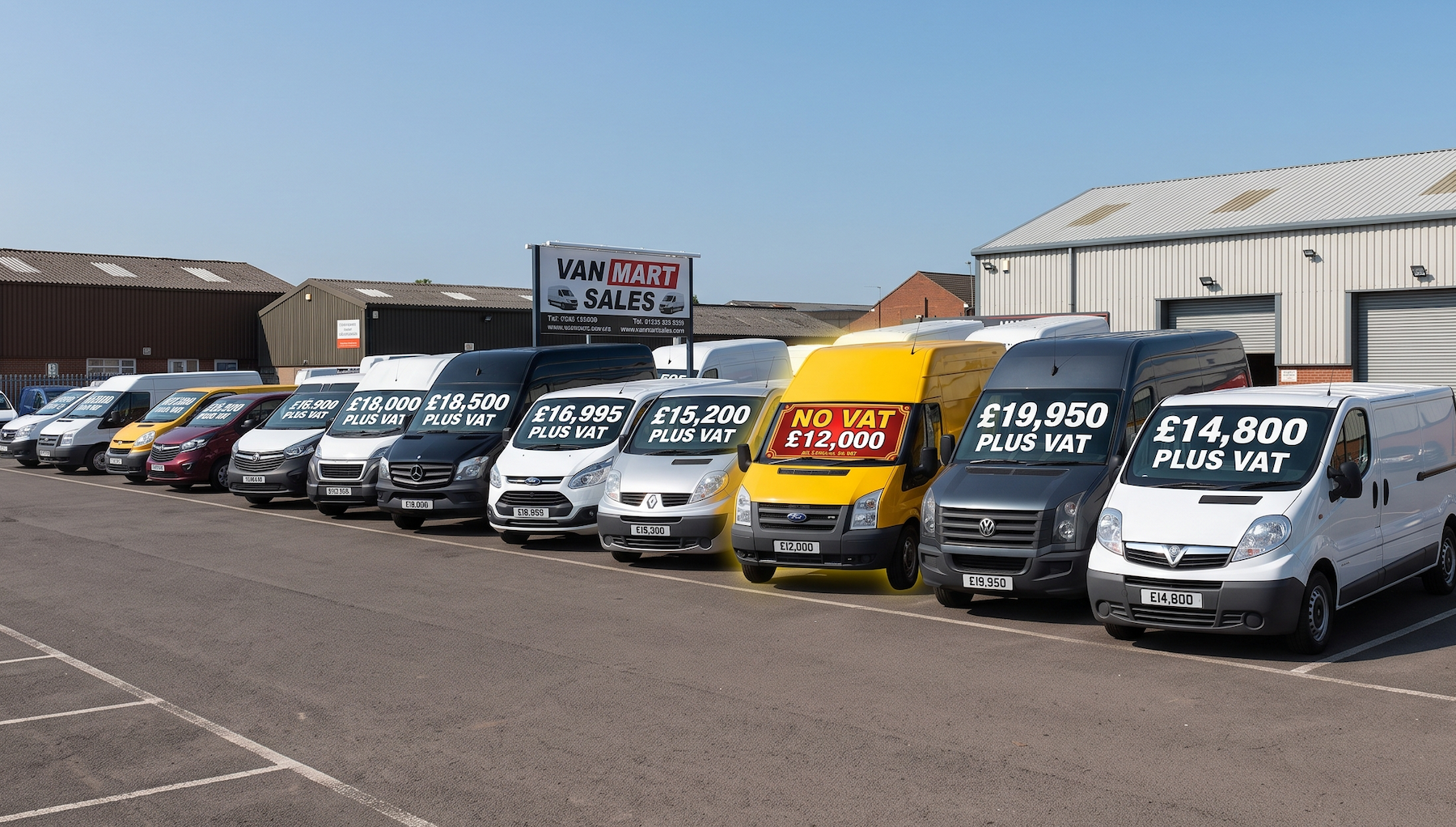
Whether a used van has VAT on it depends on its history. If the van was previously owned by someone who claimed the VAT back, it will have VAT charged on resale. If the VAT was never claimed at any point in the van's life, it will be sold without VAT and will remain that way permanently. This affects the price, who benefits from buying it, and how the finance is structured.
Walk around a used van dealer forecourt and you will notice something odd. Most vans are listed at a price plus VAT. Some are listed at a single price with no VAT mentioned. The vans look the same. The price difference is not always obvious. But something in their history has made them completely different propositions for a business buyer.
Understanding why some vans carry VAT and some do not is worth ten minutes of any business owner's time. It affects what you pay, what you can claim back, how the finance works, and what the van is worth when you come to sell it.
New vans always have VAT
Start here because it is simple. Every new commercial van sold in the UK by a VAT-registered dealer has VAT on it. The manufacturer charged the dealer VAT. The dealer claimed it back. When the dealer sells it to you, they charge VAT on the full sale price. You pay it, and if your business is VAT-registered, you claim it back from HMRC.
That is the straightforward version and it covers almost every new van transaction in the UK.
Why some used vans have VAT and some do not
This is where it gets more interesting.
When a business sells a used van, whether they can charge VAT on it depends on whether VAT was claimed somewhere in that van's history. Follow the chain.
A business buys a new van, pays VAT, claims it back from HMRC. When they sell the van three years later, they have had the VAT. So when they sell it, they charge VAT on the sale price. The van is VAT-qualifying. The buyer pays VAT, claims it back if they are registered, and the process continues.
Now consider a different scenario. The same van is bought new by someone who is not VAT-registered. They cannot claim the VAT back. The VAT disappears into the original purchase price and is never recovered. When they come to sell the van, they cannot charge VAT because they never reclaimed it in the first place. The van leaves their hands without VAT.
From that point on, no matter how many times the van changes hands, it will never have VAT on it again. It has become what the trade calls a non-VAT-qualifying vehicle. The VAT history cannot be reversed.
How dealers handle non-VAT-qualifying vans
A used van dealer who buys a non-VAT-qualifying van cannot simply decide to charge VAT on it when they sell it. They did not claim any VAT back when they bought it, so there is no VAT to account for in the normal way.
Instead, dealers selling these vehicles use what HMRC calls the margin scheme for second-hand vehicles. Under this scheme, the dealer only accounts for VAT on their profit margin, not on the full sale price. If a dealer buys a van for £8,000 and sells it for £9,000, they account for the VAT element within that £1,000 profit. The buyer never sees this. They simply see a price with no VAT.
For the business buying the van, the margin scheme calculation is invisible. The van either has VAT on it or it does not.
What this means for the price
A non-VAT-qualifying van is generally priced somewhere between the pre-VAT price and the VAT-inclusive price of an equivalent VAT-qualifying vehicle.
That is not accidental. It is basic market logic. If a dealer priced a non-VAT-qualifying van at the same level as the VAT-inclusive price of an equivalent qualifying van, no one would buy it. At least not if they were VAT-registered and could reclaim the VAT on the qualifying vehicle. So the price has to be competitive.
But it sits above the pre-VAT equivalent price because the van has genuine value to buyers who cannot reclaim VAT. Non-VAT-registered businesses, individuals, and sole traders below the VAT threshold are comparing the full price of a qualifying van against the single price of a non-qualifying van. The non-qualifying van is the cheaper option overall for those buyers.
Tom runs a small gardening business in Wiltshire and is not VAT-registered. He was looking at two similar Transit Customs. One was a VAT-qualifying vehicle at £18,000 plus VAT, so £21,600 in total. The other was a non-VAT-qualifying vehicle at £19,500 with no VAT. For Tom, the second van cost him £2,100 less despite carrying a higher list price. For a VAT-registered business that could reclaim the VAT, the calculation tips the other way.
What happens when you come to sell a non-VAT-qualifying van
This is the part most buyers do not think about at the point of purchase.
When you come to sell a non-VAT-qualifying van, you cannot charge VAT on it even if your business is VAT-registered. The van's history means it stays outside the normal VAT chain. You will sell it either to another dealer under the margin scheme or privately without VAT.
The same pricing logic that applied when you bought it applies when you sell it. The buyer is comparing your asking price against the VAT-inclusive price of an equivalent qualifying van. Your van looks cheaper to any buyer who cannot reclaim VAT, and it sits in that middle ground for buyers who can.
In practice, non-VAT-qualifying vans tend to hold their relative value well in the used market because of this pricing dynamic. They are genuinely attractive to a significant proportion of buyers.
How this affects van finance
For finance purposes, lenders treat VAT-qualifying and non-VAT-qualifying vans in the same way in terms of whether the finance is available. The difference shows up in how the deposit and VAT questions work.
On a VAT-qualifying van, the VAT is paid separately from the finance agreement. A VAT-registered business pays the VAT upfront or through a deferral arrangement, claims it back from HMRC, and the finance covers the pre-VAT purchase price. On a non-VAT-qualifying van, there is no VAT to separate out. The finance covers the full purchase price.
The no-deposit question works on the same basis for both types. The lender values the vehicle against a recognised price guide. If the purchase price is in line with the guide value, no deposit is typically required for a business with a clean credit profile. The fact that the van does not carry VAT does not change the lender's approach to the loan-to-value calculation.
For more detail on how VAT interacts with van finance and the deposit question, visit our no deposit van finance page.
A quick way to tell which type you are looking at
When you see a used van listed by a dealer, the listing will either show a price plus VAT or a single price. If it shows plus VAT, it is VAT-qualifying. If it shows a single price with no VAT mentioned, it is almost certainly a non-VAT-qualifying vehicle being sold under the margin scheme.
If you are not sure, ask the dealer directly. A reputable dealer will tell you immediately and it will be reflected in the paperwork. If they cannot give you a straight answer, that is a reason to look elsewhere.
When it comes to finance, tell us which type you are looking at when you enquire. It affects how the figures are structured and we want to make sure the agreement is set up correctly from the start. Visit our used van finance page for more on financing used commercial vehicles, or apply online and a specialist will talk it through with you.
Business Van Finance
We arrange van finance for UK limited companies and sole traders. Access to 100+ lenders. FCA authorised, FRN 984955.
Find out more →Related Guides
Hire Purchase vs Finance Lease
Understand the difference between the two main types of van finance and which one suits your business.
Credit ProfilesBad Credit Van Finance
How specialist lenders approach adverse credit applications and what you can do to improve your chances.
DepositsNo Deposit Van Finance
When no deposit is genuinely available, how VAT deferral works, and what lenders look for.
Frequently asked questions
Ready to arrange your van finance?
Speak to a specialist today. No obligation, no upfront fees.