Most of the Reasons Not to Buy an Electric Van Just Got Weaker
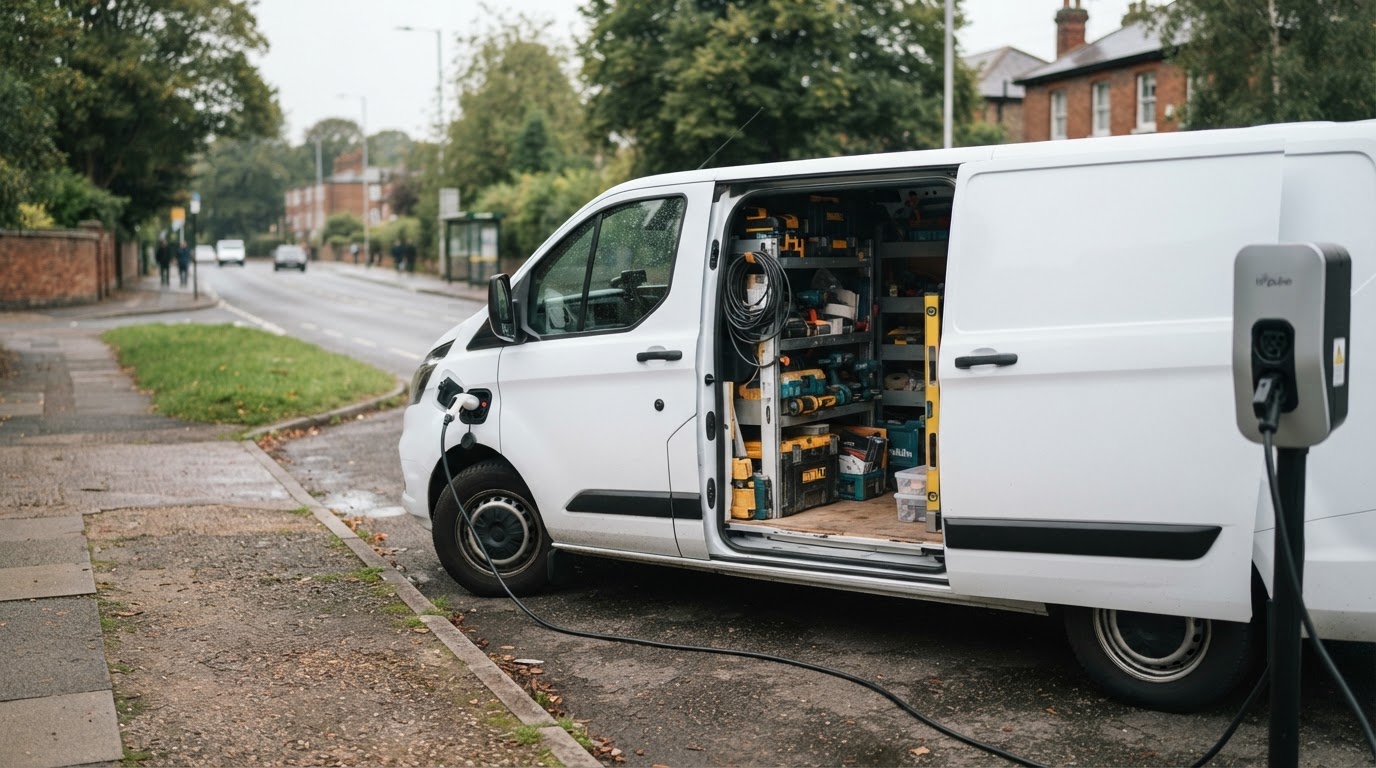
Renault revealed the new Trafic Van E-Tech electric at the IAA Transportation show in Hanover on 14 September 2026, and it was named International Van of the Year by a unanimous jury vote. The figures Renault has published, which are manufacturer claims ahead of official WLTP data, include more than 280 miles of range, a payload of 1.3 tonnes and up to 170 miles of range recovered in a 20 minute charge.
Ask most tradespeople why they have not bought an electric van and you will get one of four answers, usually in this order.
The range is not enough. It will not carry what I need it to. Charging takes too long. And it will not fit where I have to go.
Those were all reasonable objections. On the evidence of what Renault showed in Hanover last week, three of them have just become considerably harder to make.
For how finance works on this particular model, see our guide to Renault Trafic finance.
What was actually announced
Renault revealed the new Trafic Van E-Tech electric at the IAA Transportation show on 14 September, and it is the first of five new light commercial vehicles the company plans to launch by 2028.
Two days later it was named International Van of the Year by a jury of European motoring journalists, who voted for it unanimously. It beat six rivals including the Volkswagen Caddy and the Stellantis compact van range sold under the Citroën, Peugeot, Fiat and Vauxhall badges.
Worth being clear about one thing. The figures below are Renault's own, and official WLTP numbers have not been published yet. Treat them as the manufacturer's claims rather than independently verified performance, and expect real world figures to be lower, as they are for every vehicle.
The payload number is the one that matters
Renault quotes a payload of 1.3 tonnes.
For anyone who has looked at an electric van and quietly concluded it would not carry the job, that figure is the story. Batteries are heavy, and payload has been the quiet killer of electric van adoption among trades that actually load their vehicles up. Plumbers carrying boilers and copper, builders carrying materials, anyone whose van runs close to its plated weight before the stock goes in.
Alongside it sits up to 5.8 cubic metres of load space on the long wheelbase, room for three Euro pallets, a load height of 53 centimetres and two tonnes of towing capacity.
Those are not concession figures. They are numbers that stand up against a diesel of the same size.
Range, and the charging question behind it
Renault claims more than 280 miles of combined range, rising to around 430 miles in urban use, where regenerative braking does most of the work.
The more useful number for a working van is the charging one. Built on an 800 volt architecture, Renault says 20 minutes of fast charging recovers around 170 miles, or up to 236 miles for city driving.
That is the figure that changes the argument, because range anxiety in a commercial vehicle is really downtime anxiety. A van sitting on a charger is a van not earning. Twenty minutes is a tea break rather than an afternoon.
Two practical details worth knowing
The van is 1.9 metres tall. That gets it under most multi storey and supermarket height barriers, which is a genuine constraint for anyone doing domestic work in towns. The turning circle is 10.3 metres, which Renault compares to a Clio.
And it carries vehicle to load capability, meaning you can run tools or a laptop directly off the van's battery through a socket in the cab. For a trade working somewhere without power, that is not a gimmick. It is a generator you were going to have to buy anyway.
What is coming and when
The panel van is due by the end of 2026. Chassis cab and crew cab versions follow in 2027.
That second point matters more than it sounds, because chassis cab is the starting point for tippers, dropsides and most specialist conversions. Until now, a builder or a landscaper wanting to go electric has had very little to choose from. Our tipper van finance page covers how those conversions are funded.
Renault has also said its uptimize programme arrives in 2027, using connected vehicle data to cut downtime by up to half after an incident, and it claims total cost of ownership up to 10 per cent below an equivalent diesel. Both are manufacturer claims and worth testing against your own figures rather than taking at face value.
So should you wait?
Honestly, it depends on when you need the van rather than on the specification.
If your current vehicle is at the end of its life and you need something in the next few months, waiting for a launch vehicle is a poor plan. Early supply is limited, early pricing is rarely the best pricing, and you would be off the road in the meantime. The current Trafic is a known quantity and there are strong deals in the market right now precisely because manufacturers are behind on their electric targets.
If you are replacing something in the second half of next year, or you specifically need a chassis cab or a crew cab, then waiting is more reasonable.
What we would say either way is do not let the arrival of a new model stop you having the conversation. Knowing what your business can borrow and over what term takes a day, and it does not commit you to anything. Our van finance calculator will give you an indicative monthly figure in about thirty seconds.
What it means for finance
Nothing here changes how the funding works. Electric vans are financed exactly as diesel ones are, and our electric van finance page covers the plug-in van grant and the tax treatment that makes them attractive to a limited company.
Two things are worth keeping in mind on an electric van specifically.
Used values on electric vans are still less predictable than on diesel, which matters if you are looking at a finance lease with a balloon at the end, because that balloon is a bet on what the vehicle will be worth. On hire purchase it makes no difference at all, because you are buying the van.
And the software point cuts both ways. A vehicle that updates itself over the air should, in theory, age better than one that cannot. Renault makes that argument explicitly. Whether the used market agrees is something we will find out in three or four years rather than something anyone can price today.
Figures in this article are drawn from Renault's announcements at IAA Transportation 2026 and reporting by Fleet News.
Business Van Finance
We arrange van finance for UK limited companies and sole traders. Access to 100+ lenders. FCA authorised, FRN 984955.
Find out more →Related Guides
Electric Van Finance
Plug-in grants, tax advantages and clean air zone exemption, and where an electric van does and does not stack up.
Popular ModelsRenault Trafic Finance
Finance one of Britain's best-loved mid-size vans through your business. Diesel and electric, new and used.
Vehicle TypesCommercial Vehicle Finance
Vans, pickups, tippers, Lutons, minibuses and more, new and used, arranged across a panel of over 100 lenders.
ToolsVan Finance Calculator
Get an indicative monthly figure in about thirty seconds, before you speak to a dealer or commit to anything.
Vehicle TypesPanel Van Finance
The default commercial vehicle. Small, medium and large, new and used, funded through your business.
Frequently asked questions
Thinking about your next van?
Whether you buy now or wait, knowing what your business can borrow takes a day and commits you to nothing. No obligation, no upfront fees.