Is now the time to buy an electric van?
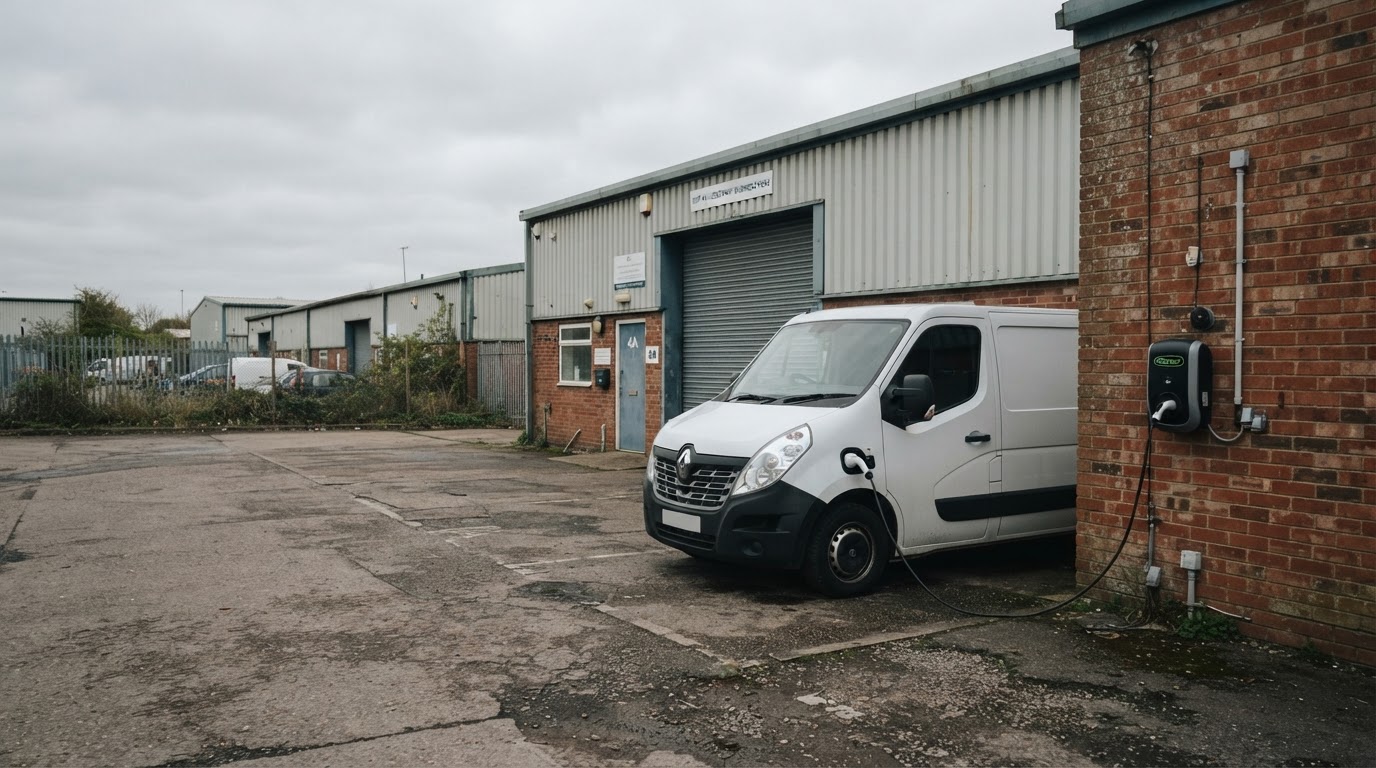
Is now a good time to buy an electric van? For higher mileage businesses that can charge at home or at a yard, yes. At September 2026 prices an electric van costs around 9.4p a mile in energy against 24.69p for a diesel, a saving of about 15p a mile. Used electric van prices have also fallen by 28.1% in two years, so a two or three year old example is far better value than it was. The case is weakest for low mileage businesses and for anyone who has to rely on public rapid charging, where the saving roughly halves.
Used electric van prices have fallen by almost a third in two years while diesel has climbed to just under £2 a litre. For some businesses the sums have stopped being marginal. For others they still do not work at all. Here is how to tell which one you are.
A three year old electric van has lost about a third of its value.
That is a disaster if you bought one new. It is a genuine opportunity if you are buying one now, and it is the biggest change in this market that nobody seems keen to talk about, because the people who would have to talk about it are the ones holding the vans.
Between June 2023 and June 2025, average used electric van prices fell 28.1%. In money, that is £6,875 off the average example. The average used electric van on the market by the middle of 2025 was £17,560, and sales had more than doubled over the same period. Alastair Campbell of Marketcheck UK, whose data that is, put it plainly: average prices down by nearly a third and sales more than doubled means these are now a far more accessible option for businesses and sole traders.
So that is the pull. Here is the push.
Diesel is at £2 a litre
On 27 September 2026 the UK average diesel price was 199.2p a litre.
Supermarkets averaged 196.2p. BP, Shell and Esso averaged 200.8p, so if you filled up at a branded forecourt this week you paid more than £2 a litre. On a motorway you paid a good deal more than that.
It has also moved quickly. Diesel is up 2.9p in seven days and 15.8p over thirty. Unleaded is at 174.2p, which means diesel now carries a 25p a litre premium over petrol, and that premium falls almost entirely on people who had no choice but to buy a diesel van.
Put the two together, a third off used electric vans and diesel over £2, and the question stops being ideological and becomes a sum.
The sum
Here are the numbers, with the assumptions, because the assumptions matter more than the headline.
A diesel van costs about 24.69p a mile in fuel. That is the September 2026 pump price at 36mpg.
An electric van costs about 9.4p a mile. That is 7p a mile charging at home or at your yard and 15p a mile on public charging, blended at 70% home and 30% public.
Call the saving 15p a mile. Which sounds huge, and is, but only after you multiply it by your own mileage. At 8,000 miles a year you save about £1,220. At 12,000 miles about £1,835. At 15,000 miles about £2,290. At 20,000 miles about £3,060. At 25,000 miles about £3,820.
Now set that against what the electric version actually costs you over the diesel. If the gap is £6,000, a business doing 20,000 miles has it back in under two years. A business doing 8,000 miles takes five years, by which point it is thinking about changing the van anyway.
Mileage is the whole decision. Not the badge, not the politics, not the range figure in the brochure. Mileage.
The assumption that catches people out
Look again at that 70% home charging figure, because it is quietly carrying the entire argument.
If you have a driveway or a yard with a charger, the sums above hold. If your van lives on the street, or in a residents' bay, or at a customer's site half the week, then you are paying 15p a mile rather than 7p. Your saving drops from 15p a mile to under 10p and every payback figure above stretches out by half again.
Nobody selling you an electric van leads with that. It is the most important question in the exercise and you can answer it in ten seconds by thinking about where the van sits overnight.
Lisa Brankin, Ford's UK Chair and Managing Director, gave the honest version in July: "The van is the heart of their business, and the switch to full electric doesn't make sense for some of them at the moment."
She is right. The word doing the work is "some", and it used to be "most".
What you can actually buy
The choice is far wider than it was, and the useful figures are range when the van is loaded and payload, not the headline WLTP number.
Ford E-Transit Custom
Around 209 miles in real use, dropping to 160 to 170 in winter. The most conventional thing here and the one most businesses end up on, because it drives like a Transit Custom and there are a lot of them about.
Ford E-Transit
The big one. Up to 249 miles, still over 180 fully laden, an 89kWh battery and a maximum payload of 1,758kg, which is the figure that surprises people who assume electric means compromised.
Renault Master E-Tech
Up to 285 miles WLTP from an 87kWh battery, and a payload up to 1,625kg. On paper the longest legs in the class.
Mercedes eSprinter
Up to 271 miles from a 113kWh battery. A big battery in a big van, priced accordingly.
Vauxhall Vivaro Electric
Up to 219 miles, 75kWh, 1,000kg payload. The same platform underpins the Fiat E-Scudo at around 217 miles and the Toyota Proace Electric, so if one does not suit the deal, another might.
Maxus eDeliver 9
Up to 219 miles and 1,200kg of payload. Cheaper to buy than the mainstream badges, though worth reading the note on lenders below before you commit.
Ford E-Transit Courier
Up to 207 miles and room for two Euro pallets. The small van case for electric is the strongest of the lot, because small vans do short urban miles, which is exactly what electric is good at.
Volkswagen ID. Buzz Cargo
276 miles WLTP from 79kWh, and this is where honesty is required. Payload is 607 to 712kg depending on spec. That is low. If you carry weight, this is not your van, whatever it looks like on your driveway.
That payload point applies across the board. Batteries are heavy, and the weight comes out of what you can carry. Always check the payload of the specific electric model against the diesel you are replacing rather than assuming they match.
Why two and three year old examples stack up
A two or three year old electric van has had the worst of its depreciation taken by somebody else, and unlike a diesel of the same age it has not necessarily had the hard life that mileage usually implies, because most early electric vans were bought for urban multi-drop work and short daily routes.
There is also the battery. Manufacturers typically warrant the traction battery for eight years or 100,000 miles, though it varies and you should check the specific van rather than take that as read. On a three year old example, that means a good five years of battery cover still to run, which is a stronger warranty position than you get on almost any other three year old vehicle.
What you should do is get a battery health check before you buy, in writing. A reputable dealer will provide one. Anyone who will not is telling you something.
The tax everyone is worried about
You have probably seen the headlines about pay per mile tax and assumed it kills the case. It is worth reading the detail.
Electric Vehicle Excise Duty starts in April 2028 at 3p a mile for battery electric vehicles and 1.5p for plug in hybrids. The government published its consultation response and draft legislation in July 2026, so it is happening.
But it applies to cars. The government's own position is that motorcycles and vans are not included at the outset, on the basis that the switch to electric is less advanced for those vehicle types.
So the tax that is currently making car buyers hesitate does not, as things stand, apply to an electric van in 2028. "At the outset" is doing some work in that sentence and nobody should assume vans are exempt forever. But if you have been putting off an electric van because of pay per mile, you have been reading about a different vehicle.
The catch
Two of them, and you should know both.
Residual values are still soft. Almost two thirds of leasing companies surveyed expect electric values to fall further through 2026, and early electric vans have taken the worst of it. Toby Poston, chief executive of the BVRLA, described plummeting residual values as clouding the horizon. If you buy used you avoid most of that fall. If you buy new you are volunteering for the next bit of it.
Lenders care about which model you choose. Because the used market is young and values are unsettled, funders look more favourably on models with an established used trade, so the mainstream badges tend to get better terms than the newer entrants. It does not mean a less familiar van cannot be funded. It does mean the choice of vehicle and the choice of agreement are linked in a way they are not with a diesel Transit, and it is worth a conversation before you put a deposit down.
We have covered how the mandate and the funding picture interact separately, in electric van finance and the ZEV mandate.
So, is now the time?
Yes, probably, if you cover more than about 12,000 miles a year, the van sleeps somewhere you can plug it in, and your payload needs fit within what the electric version can carry.
Not yet, if you do low mileage, charge in public, run long motorway trips fully loaded, or need every last kilogram of payload.
And if the answer is yes, a two or three year old example is where the value is at the moment, by a distance.
Funding an electric van
We arrange electric van finance for UK businesses of every size and age, from sole traders and newly formed limited companies through to established fleets, across a panel of more than 100 lenders. If you are looking at a used example, the same applies, and used commercial vehicle finance covers how age and mileage affect what is available.
Speak to us before you commit to a vehicle rather than after. We can tell you what is realistic for your business and which agreement makes sense for the van you have in mind, and you will deal with the same person from the first call through to the money reaching the seller.
Business Van Finance
We arrange van finance for UK limited companies and sole traders. Access to 100+ lenders. FCA authorised, FRN 984955.
Find out more →Related Guides
Electric Van Finance
The plug-in van grant, the tax treatment and how electric van finance is structured for UK businesses.
Used VehiclesUsed Commercial Vehicle Finance
How age, mileage and converted bodies affect what a used commercial vehicle will fund at.
Plan your budgetVan Finance Calculator
Get an indicative monthly figure in about thirty seconds before you commit to a vehicle.
Frequently asked questions
Thinking about going electric?
Tell us the van you are looking at and what your business does, and we will tell you what is realistic. No obligation and no upfront fees.