Eighteen months on, the tool theft bill has not moved
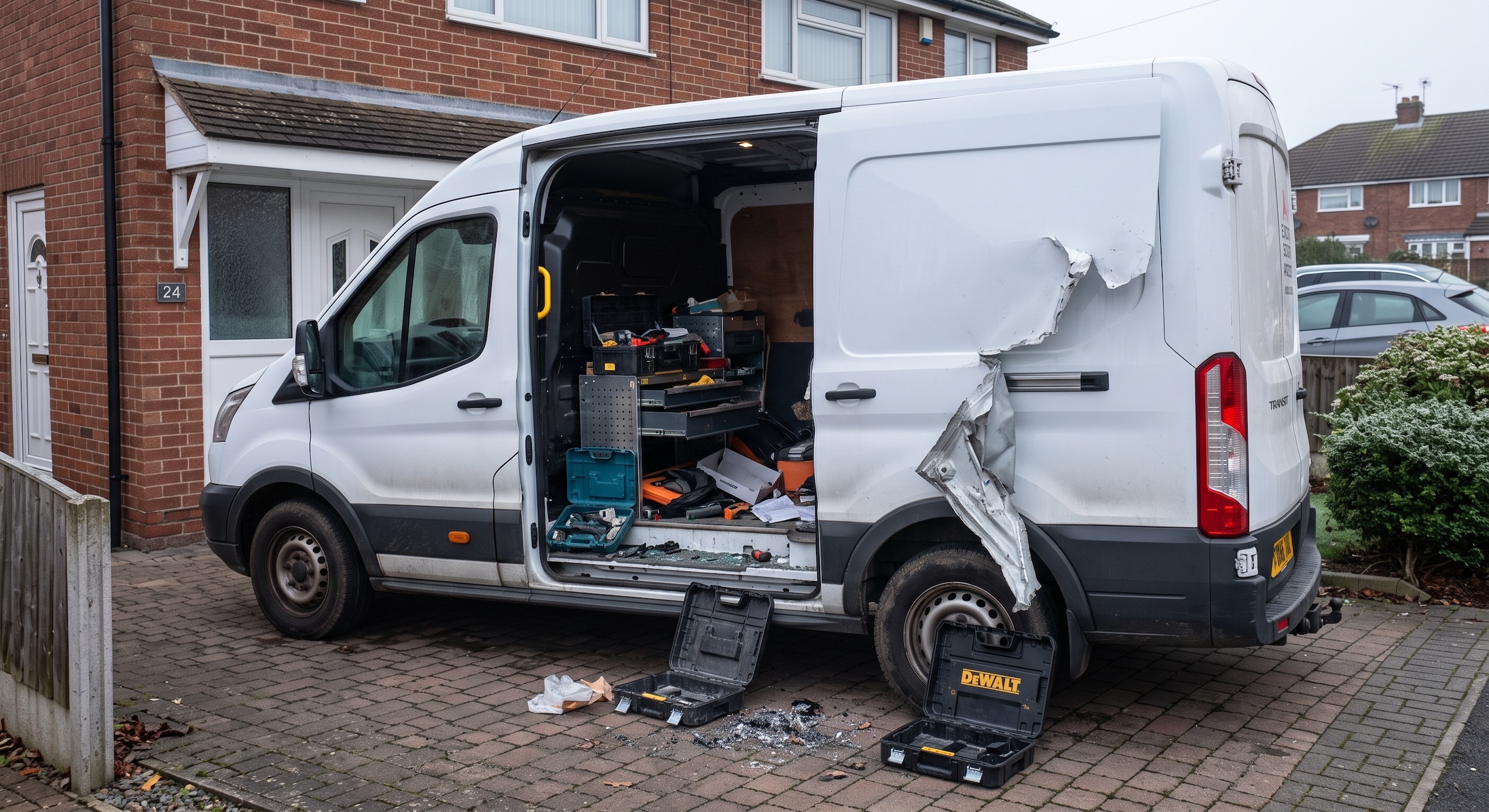
The Theft of Tools of Trade (Sentencing) Bill is a private members' bill introduced in April 2025 by Amanda Martin, Labour MP for Portsmouth North. It would move tool theft from harm category 3 to harm category 2 in sentencing guidelines, allowing tougher sentences on thefts worth under £10,000, and would require courts to count vehicle damage, lost earnings and business interruption as part of the loss rather than just the value of the tools. As of October 2026 it has completed only its first reading and has not become law.
I cannot be the only person whose LinkedIn feed has quietly turned into a rolling noticeboard of other people's misery.
Every single week. Somebody's Transit with the side door peeled back like a tin of sardines. A photograph of empty racking taken at six in the morning in the half dark. And always the same caption, some variation of "gutted, three grand's worth gone, back to square one", with forty comments underneath from people saying it happened to them too, usually in the same month.
For a while I assumed this was just the algorithm feeding me what it thought I wanted. It is not. There is a reason my feed looks like that, and the reason is that a tool is stolen from a tradesperson in Britain roughly every twenty one minutes.
The numbers, which are worse than you think
Police forces reported 25,525 tool thefts in the twelve months to December 2024, according to freedom of information requests. That is about seventy tradespeople a day. Just under half of them, 12,414, were thefts from vans.
The total cost comes out at around £56 million. Forty million of that is the kit itself. The other sixteen million is the bit nobody insures and nobody talks about: the jobs that did not happen, the customers who went elsewhere, the mornings spent at Screwfix instead of on site.
Then there is the human arithmetic underneath it. One survey of a thousand van drivers found 28% had been hit during 2024, up from 19% the year before, with an average loss of £2,433 and the time off work nearly doubling to around four days. Another, from June this year, found 76% of tradespeople have been targeted at some point in their working lives. Three quarters. You would struggle to find a trade where that is not true of the bloke standing next to you.
And here is the detail that genuinely stopped me when I read it. Nearly half of construction professionals say they have been approached by criminal groups offering "protection".
Protection. In Britain. In 2026. On a building site.
Clive Holland of Fix Radio put it rather well: "This is not a minor crime wave. It is a sustained attack on Britain's working trades people." He is not wrong, and the striking thing is how little anyone outside the trade seems to have noticed.
So somebody wrote a law
They did, as it happens.
On 23 April 2025, Amanda Martin, the Labour MP for Portsmouth North, introduced the Theft of Tools of Trade (Sentencing) Bill. It is a sensible piece of work. It would shift tool theft from harm category 3 to harm category 2 in the sentencing guidelines, which matters because at the moment a theft worth under ten grand sits in the bracket that gets you very little indeed. It would also force courts to count the whole loss, so the damage to the van, the lost earnings and the knock-on disruption all go into the number rather than just the resale value of a nicked SDS drill.
Ninety one per cent of tradespeople surveyed backed it. Of course they did. It is the first time in years anyone in Westminster appeared to notice that this was happening at all.
Its second reading was scheduled for 31 October 2025, having already been pushed back from July.
Go and look at Parliament's own page for it today. First reading: complete. Second reading: "in progress". Last updated, according to the site, on 6 May 2026.
That is eighteen months. No committee stage. No Lords. No Royal Assent. Nothing.
The bit nobody wants to say out loud
Here is the awkward truth, and I say it with no pleasure at all.
It is a Ten Minute Rule bill. That is a specific parliamentary mechanism which lets a backbench MP stand up, speak for ten minutes, and introduce a bill. It is an excellent way of getting an issue onto the record and into the press. It is a famously terrible way of actually passing a law. The overwhelming majority of them never get anywhere near the statute book, and everyone in Westminster knows it.
None of this is Amanda Martin's fault. She used the route that was available to her, which is more than anybody else did, and the bill itself is perfectly sound. The problem is the vehicle, not the driver.
But I suspect a fair chunk of that ninety one per cent who backed it did not know they were backing something with those odds. And they should, because it changes what you do next. If you think the law is about to fix this, you wait. If you understand it probably is not, you stop waiting.
Where it actually happens
While we are dismantling comfortable assumptions, here is another one.
The received wisdom is that if you get the van off the street and onto your own drive, you will be fine. The figures say otherwise. 35% of thefts happen at job sites, 29% at home, 22% in public car parks, 18% from outbuildings and 7% from inside houses.
Home is the second most common place to have your tools stolen. Not a dodgy lay-by. Not a service station. Your driveway, with you asleep upstairs.
As Rob Rees of Markel Direct put it, there is no location for storing tools that is completely safe from being targeted. Which is a bleak thing to read on a Tuesday, but it is better than a false sense of security.
How they actually get in, which is not what you think
This is the part that changed how I think about the whole problem.
Almost everybody's instinct, after a break-in or a near miss, is to buy a better lock. It is the obvious move. It is also, in most cases, solving a problem you do not have.
The dominant method now is peel and steal. They do not pick the lock and they do not force it. They get a pry bar or just a pair of strong hands into the edge of a side or rear door and apply pressure until the thin metal of the door skin bends far enough that the lock simply lets go of the frame. Frequently with no specialist tools at all, and often in well under a minute.
Your lock was never defeated. It stayed locked the entire time. The door just stopped being a door.
Which means the single most useful thing you can fit is not another lock at all. It is anti-peel protection: brackets and reinforcing plates along the door edges that stop the panel deforming in the first place. It is cheaper than most locks and it addresses the actual attack.
What actually stops them
With that in mind, here is what is worth your money, roughly in order.
Anti-peel plates and door reinforcement. For the reason above. If you only do one thing, do this one.
A deadlock or a hook lock on top of the factory locking. A deadlock throws a bolt into the bodywork using a separate key and works independently of your central locking, so defeating the van's electronics gets a thief nowhere. A hook lock does the same with a hooked bolt that resists prying rather better. Expect somewhere around £150 to £250 per lock fitted.
Slam locks if you are multi-drop. They lock the instant the door shuts, which removes the single biggest cause of courier losses, namely the door that got left for thirty seconds because you were carrying a box.
Buy certified, not just expensive. Look for Sold Secure, ideally Gold or Diamond rated, Secured by Design, or Thatcham Quality Assured. Those ratings mean somebody actually attacked the thing in a lab. Fitting Thatcham approved security can also pull your insurance premium down, so ask your broker before you buy rather than after.
Reverse up to a wall. Free, takes four seconds, and makes the rear doors physically inaccessible. On a street full of vans parked nose first, this alone moves you down the list.
A Faraday pouch for the keys if your van is keyless, because relay attacks are still a thing and the fob sitting by the front door is broadcasting all night.
Mark everything and write it down. UV marking and engraving on the tools, serial numbers recorded somewhere that is not in the van. Without that, police can recover your gear and still have no way of proving it is yours.
Empty it overnight. Everybody says it. Almost nobody does it. It remains the only measure with a one hundred per cent success rate.
One thing about the finance
Worth knowing, and it takes thirty seconds.
If they take the whole van rather than the contents, the finance agreement does not go with it. The agreement is between your business and the lender, and the balance on it survives the vehicle. Your insurer will settle on market value, which is a different number from your settlement figure and is not always the larger of the two.
It is not a reason to panic and it is not an argument against buying a van on finance. It is a reason to know both numbers before you ever need them. Ask your lender what your settlement figure is today, and ask your insurance broker how they calculate market value and what happens if there is a shortfall. Two short phone calls, and you never have to think about it again.
So, eighteen months
The bill is still sitting there, technically alive, procedurally going nowhere. The thefts are still running at one every twenty one minutes. My LinkedIn feed still looks like a crime blotter.
I would love to end this with something optimistic. What I would actually say is this: do not build your plans around a law that has not moved since April 2025. Reinforce the doors, reverse up to the wall, empty the van, and get on with it.
Which is, depressingly, roughly what your grandfather would have told you.
Sources: UK Parliament, Theft of Tools of Trade (Sentencing) Bill; police freedom of information data for the twelve months to December 2024; Volkswagen Commercial Vehicles survey of 1,000 UK van drivers; Trade Direct Insurance survey, June 2026; Markel Direct; Howden Insurance van locks guide; Loads of Vans van security guide.
Business Van Finance
We arrange van finance for UK limited companies and sole traders. Access to 100+ lenders. FCA authorised, FRN 984955.
Find out more →Related Guides
Van Finance by Trade
How van finance works for couriers, electricians, builders, removals and more, trade by trade.
Electric VansIs Now the Time to Buy an Electric Van?
Diesel at £2 a litre and used electric van prices down 28%. The arithmetic that decides it.
Bad CreditVan Finance With Bad Credit UK
What specialist funders look at, realistic deposit expectations, and mistakes that sink adverse credit applications.
Frequently asked questions
Replacing a van, or funding the next one?
We arrange finance for the trades this happens to most, from plumbers and electricians through to groundworkers and scaffolders. Tell us what you need and we will tell you what is realistic. No obligation and no upfront fees.