He asked for £15,000. The lenders start at £25,000
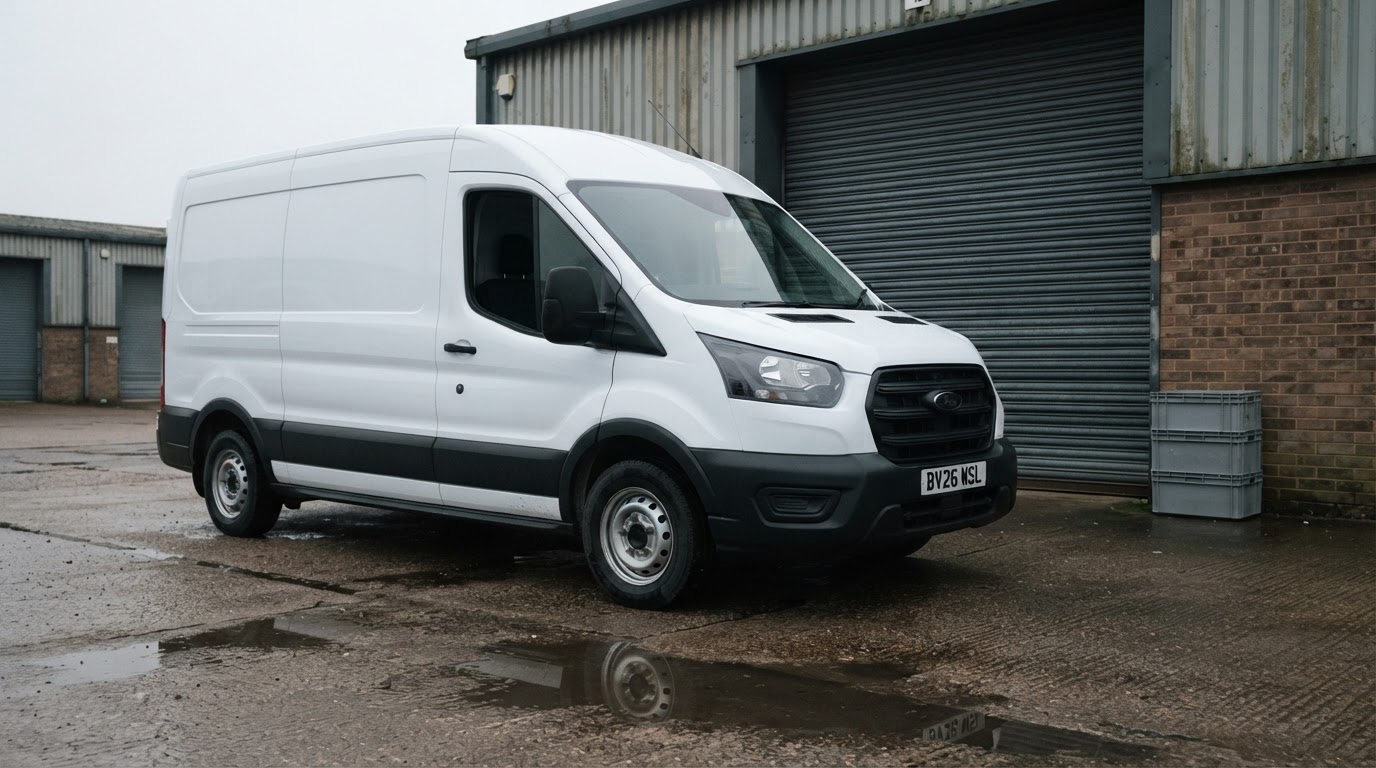
He had paid cash for the van five months earlier and wanted some of that money back in the business. Four separate things stood between him and it.
A delivered wholesale business, supplying convenience stores, came to us having paid cash for a large panel van five months earlier. The van was his, outright, with no finance on it. What he wanted now was some of that money back in the business, and the enquiry arrived through our page on van refinance asking for £15,000.
He ended up borrowing £25,500. Not because anyone talked him into it, but because that is roughly where the lenders who fund this kind of deal begin, and because when he sat down and worked out what the next few months actually needed, the larger figure was the more useful one. Four separate things had to be dealt with first. It paid out seven days after he filled the form in.
The situation
He had been trading just under two years, after a decade working in the same industry for other people. The business was growing. He had bought the van new, in cash, because he had the money at the time and no interest in paying for finance he did not need.
Under two years of trading narrows the lender panel on its own, for the same reason it does when a business is looking at van finance for a new business. There are fewer filed accounts to read, so lenders ask for more bank statements and look harder at the person behind the business.
Five months later the position had changed. Nothing had gone wrong. It was simply the time of year, the money was tied up in a vehicle sitting on the drive, and he wanted some of it working in the business instead. He had been offered merchant cash advances and had not taken one.
So the question was straightforward. Can I raise money against a van I already own?
The answer is usually yes, and we do it regularly. This one took more work than usual.
What is the minimum a sole trader can borrow?
He wanted £15,000.
For a sole trader, an agreement below £25,000 is regulated credit rather than unregulated commercial finance. Those agreements exist and they are perfectly legal. The difficulty is who writes them. Most lenders who fund businesses only write unregulated commercial agreements, so their minimum advance to a sole trader starts at £25,000.
That is not a rule telling anyone what they have to borrow. It is simply where the lenders are. Ask for less and the choice available to you shrinks to a handful, and the terms on offer tend to reflect that.
So we explained the position and left it with him. We are not in the business of selling anybody a larger loan than they need, and if £15,000 had been the right number for him, the honest answer would have been to say so and look at the narrower options.
He went away and added up what the next few months actually required. A tax bill due at the end of January, larger than he had budgeted for. A VAT quarter. And the usual winter dip in a trade that supplies small shops.
Set against that list, £15,000 turned out to be an underestimate of his own position. The larger sum was genuinely useful rather than surplus, and all of it was going into the business, which is where he had wanted money in the first place.
If you are reading this and the bigger figure would be no use to you, say so early. There are fewer lenders below that level, but there are some, and we would rather tell you that than arrange something the wrong size.
A limited company does not run into this. The practical minimum there is nearer £10,000, and the difference has nothing to do with the quality of the business.
What if the van values below what you need to borrow?
If the advance had to be over £25,000, the van had to support it.
The standard trade valuation came in at around £23,000.
That is not unusual and it is not wrong. A five month old van with a few thousand miles on it books at a trade figure, and a trade figure is what most lenders will lend against. It was simply £2,000 short of where it needed to be.
What closed the gap was the purchase invoice. He had bought the van new with close to £10,000 off list, which is a real discount on a real vehicle rather than an inflated price, and the invoice showed exactly that. Presented to the right lender, the invoice evidenced what the van was genuinely worth rather than what a book said a van of that age was worth.
That is the part of this job that does not happen on a website. Somebody has to look at the paperwork, work out which lender will listen, and make the argument.
Can you raise money against a van you have owned for months?
There is a product called sale and hire purchase back. You bought a vehicle for cash, you sell it to a lender, and you take it straight back on hire purchase. It exists precisely for the situation this customer was in.
It has a time limit. Inside the window, lenders will usually work from the purchase invoice and often fund the full amount. Outside it, they revert to trade value and advance a percentage of that.
The window varies a great deal between lenders. Some work to a couple of weeks, some to a month. The lender on this deal worked to ninety days.
He had owned the van for five.
So this needed underwriter discretion rather than the standard route, which means asking a specific person at a specific lender to take a view on a specific vehicle, with the invoice and the condition of the van in front of them. They did.
If you have had a vehicle longer than a few weeks, do not assume the door has closed. Assume it needs a conversation.
Does it matter if your business takes mostly cash?
Somewhere between seventy and seventy five per cent of this business's takings come in as cash, paid in at the Post Office every week. For a delivered wholesaler supplying small shops, that is completely normal.
To an underwriter reading bank statements, a pattern of regular cash deposits is something to ask about, and they did.
The answer was good. His business bank had already looked at it when the account was new, understood the trade, and been satisfied. We put that to the underwriter directly, with the context, rather than waiting for it to come back as a condition on the offer. It did not become one.
If your business takes cash, this is worth knowing in advance. It is not a problem, but it is a question, and the time to answer it is before it is asked.
How it was structured
£25,500 advanced. No deposit, because there is nothing to deposit when you already own the asset.
Two years. The lender approved it over five, and we recommended he take the shorter term.
The reasoning behind that is worth understanding, because it catches a lot of people out. You can settle a commercial agreement early at any time and there is no penalty for doing so. What you do not get is a rebate on the interest. Settle a five year agreement after two and you still pay five years of interest.
He thought there was a fair chance of clearing it early, and he could comfortably afford the higher monthly payment that a two year term brings. So two years was simply cheaper for him than five, and that was the advice.
No personal guarantee. There is no separate guarantee for a sole trader, because a sole trader and their business are the same legal person. There is nobody else to guarantee it.
That same point explains something else that surprised him. He had paid for the van from his personal account, and that was fine. For a limited company, which is a separate legal entity from its director, the vehicle needs to be bought in the business name if the business wants to claim the depreciation against corporation tax. For a sole trader there is no such distinction, so buying in his own name was buying in the business name. Worth checking with your accountant, but the structure is different for the two.
The lender becomes the legal owner during the agreement. The V5 does not change and he stays the registered keeper. Ownership passes to him at the end, which is how hire purchase works and the main thing that separates it from a lease. We have compared hire purchase and finance lease separately if you are weighing up the two.
How long it took
He filled in the form on a Wednesday morning. He had a call back within fifteen minutes. The documents went to the lender that afternoon, it was approved in principle six days later, and it paid out on day seven.
The money went into the business, which is where he wanted it.
If you own a van outright and need the cash
A few things worth taking from this.
Owning the vehicle outright is the strong position, not the weak one. You have an asset with no finance on it, and that is exactly what a lender wants to lend against.
Time matters more than most people expect. The difference between the easy route and the one that needs an argument is measured in weeks and months, not years, so if you are thinking about it, think about it now rather than in the spring.
Bring the purchase invoice. On this deal it was the single document that made it possible.
And if you are a sole trader, the £25,000 figure is not a judgement on your business. It is where most of the commercial lenders start.
If you own a van or any other commercial asset outright, or you have finance on one and there is equity above the settlement figure, we can tell you quickly what is realistic. There is more on how it works on our van refinance page, a van finance calculator if you want a sense of the payments, and a separate page on van finance rates explaining how these are priced.
This case was handled by Roland Tedder, Senior Finance Broker.
Talk to us about your business
Whether you have been trading for years or have not started yet, tell us what you are trying to do. No obligation, no upfront fees.
Apply onlineBusiness Van Finance
We arrange van finance for UK limited companies and sole traders. Access to 100+ lenders. FCA authorised, FRN 984955.
Find out more →Related Guides
Van Refinance
Raise money against vans your business already owns, including vehicles you bought for cash and vehicles with finance still running on them.
Your SituationNew Business Van Finance
New limited companies and businesses under two years old can apply. What lenders look for and how to strengthen the application.
Vehicle TypesUsed Commercial Vehicle Finance
Finance for used commercial vehicles, including vans you already own and want to release capital from.
Frequently asked questions
Tell us what you own and what you need
Send us the vehicle details and roughly what you are looking to raise, and we will tell you honestly what is achievable. No obligation and no upfront fees.
Some details have been changed to protect our customer's confidentiality.